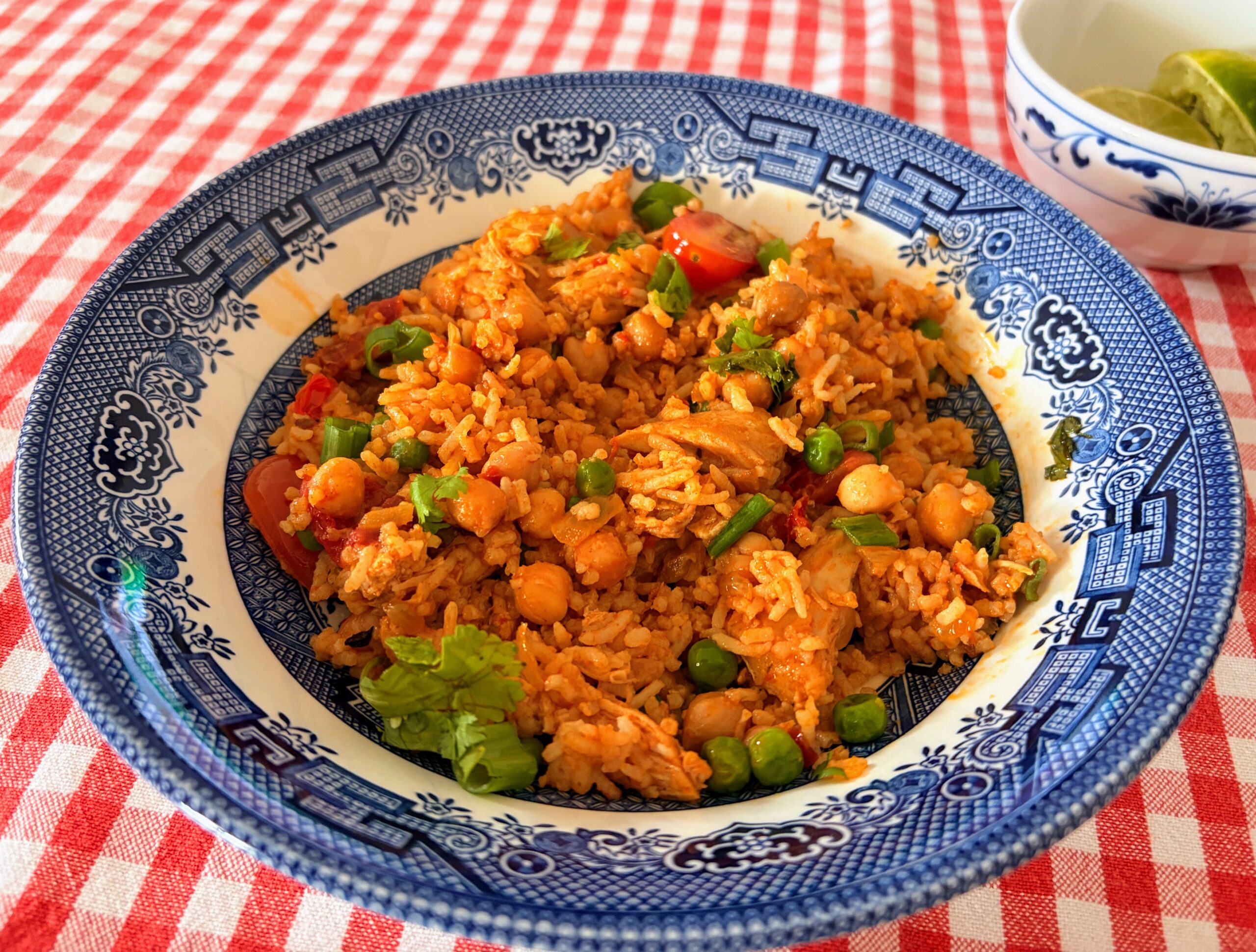
Arroz Frito à Moda de Macao
Macanese fried rice is a product of Macao’s unique history — a Portuguese trading post established in 1557 where Chinese cooks and Portuguese ingredients met in the same kitchen. There are many versions of “Arroz frito”. Some add olives, chickpeas, shrimp, pork or chicken or eggs. It is closely related to Peru’s arroz chaufa, both descending from the same Chinese chaofan tradition carried along different colonial trade routes.
Ingredients
- 3 cups cooked, day-old Jasmin or Basmati rice
- 2 Tbsp olive oil, divided
- 2 cups roasted or cooked chicken, roughly shredded
- 1 cup finely chopped onion
- 3 garlic cloves, finely minced
- 1/2 cup green bell pepper, finely chopped
- 1 cup (55 g) smoked bacon, diced
- 1 cup frozen peas
- 1 1/2 cups chickpeas, rinsed and drained
- 2 cups cherry tomatoes, sliced lengthwise
- 1/4 cup soy sauce
- 1 tsp fish sauce, or to taste
- 1 lime, juiced
- ¼ tsp sugar or to taste
- Salt and ground white pepper, to taste
- 1/4 cup scallions, thinly sliced
- 1/4 cup fresh cilantro, or Italian parsley, finely chopped
Preparation
Make the sauce. In a small bowl, stir together the soy sauce, fish sauce, lime juice, and sugar until the sugar dissolves. Set aside.
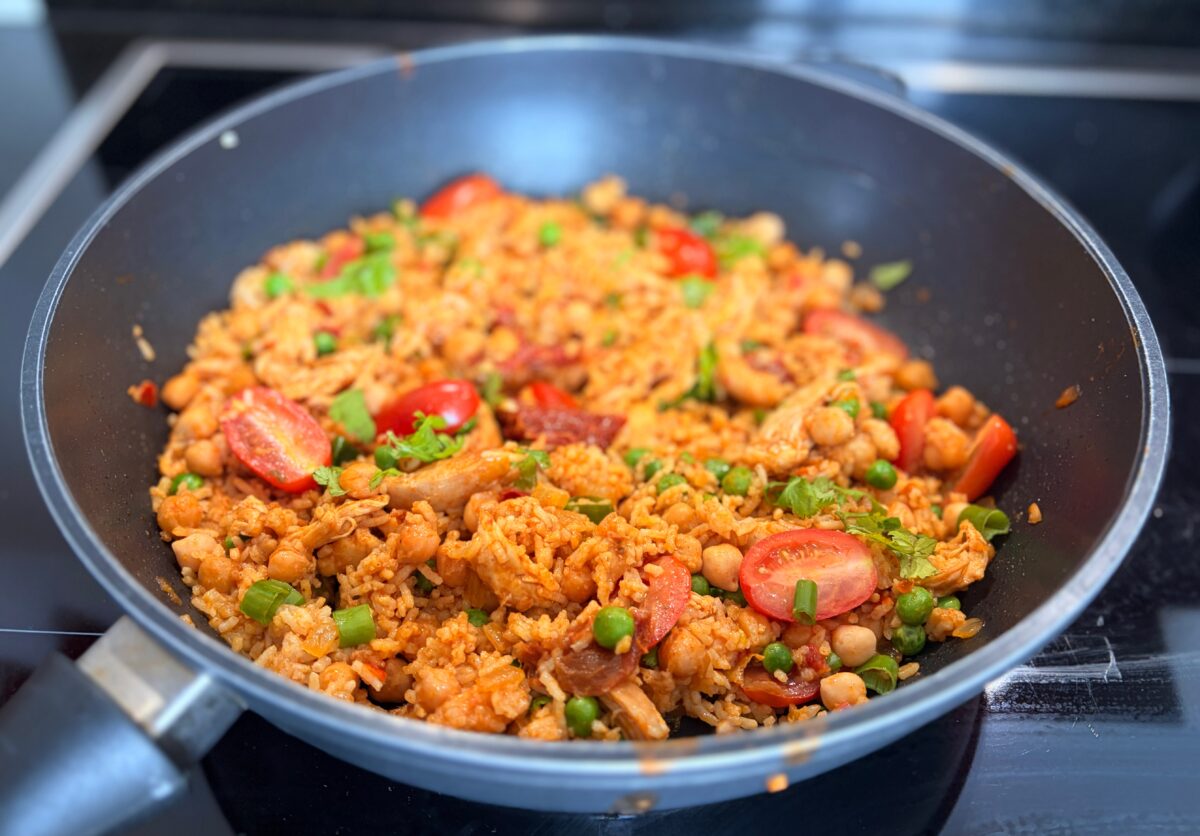
Vegetable Base. Add 1 tablespoon of oil to the pan. Add the onion and sauté over medium-high heat until translucent, about 3 minutes. Add the garlic, bell pepper, peas, chickpeas and cherry tomatoes. Cook for about 3 minutes or until vegetables start to get limp. Heat the remaining tablespoon of oil, over medium high heat. Add the bacon dices, let it render a bit of fat, then add the shredded chicken and rice. Toss and stir everything breaking up any rice clumps. Add vegetables, and the sauce mixture to the rice. Continue stir-frying until everything is well combined and warmed through. Taste for seasoning.
Serve. Transfer to a serving dish and scatter chopped scallions and cilantro over the top.
Notes
Rice: Day-old refrigerated rice is essential.
The choice of meats, sausages and seafood varies to taste and what is ready available in your fridge. Do not be afraid of using left-overs. They are of great use in this dish.
If sauce seems too little, double the quantity and adjust it to your taste.
Comments