
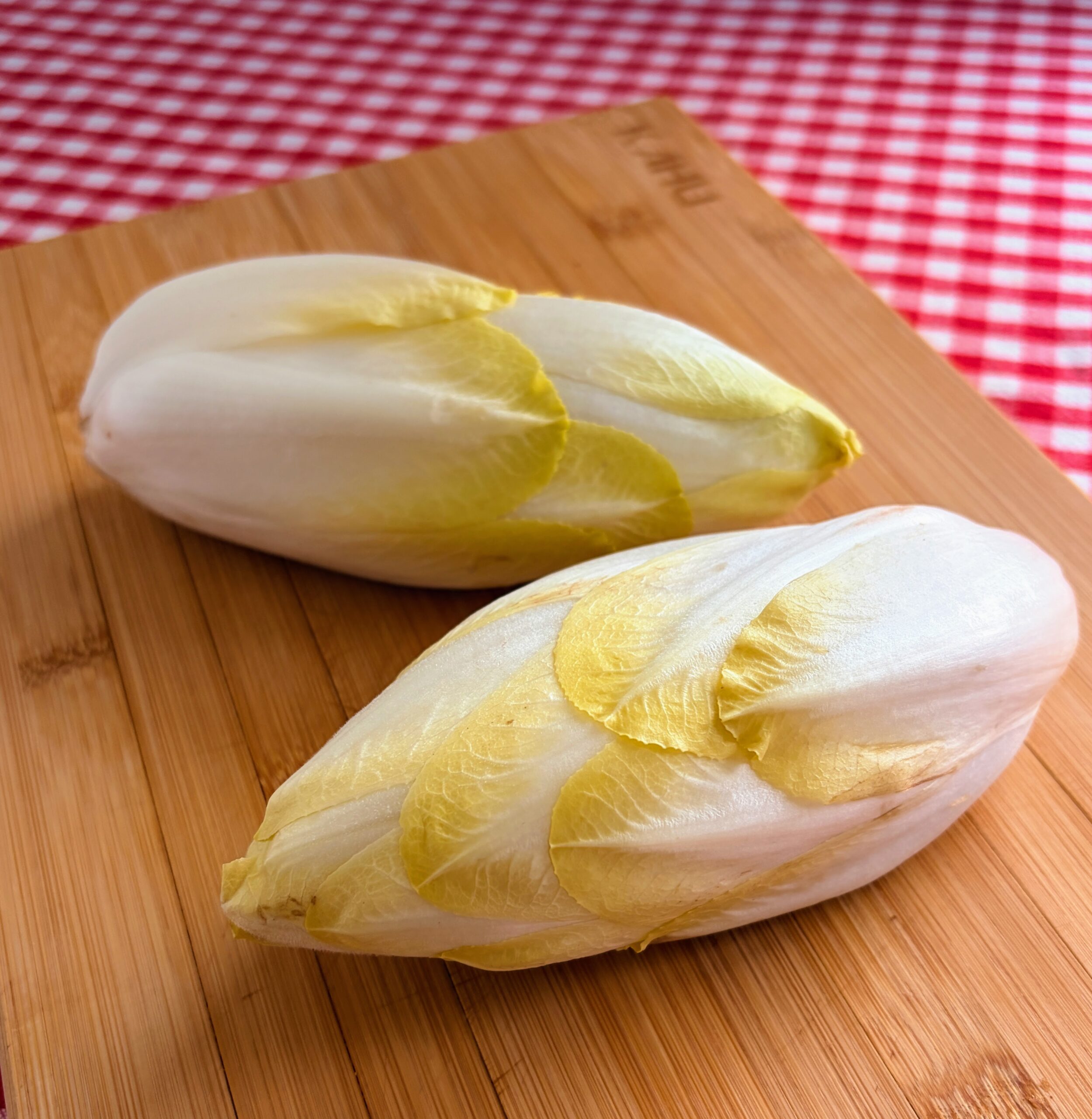
Belgian Endive: A Vegetable Grown in the Dark
Belgian endive doesn’t grow the way most vegetables do. It’s raised twice: once in a field, for the root, and once in total darkness, for the pale, tightly furled head we actually eat. That second stage is called forcing, and it’s the reason endive looks and tastes like nothing else in the produce aisle.
Where It Comes From
Endive is a variety of chicory, Cichorium intybus, and by most accounts its discovery was an accident. The commonly told story dates to Belgium in the 1830s: a farmer stored chicory roots in a dark cellar, left them longer than planned, and came back to find they had sprouted pale, tender, mildly bitter leaves. The Dutch name for the result, witloof, simply means “white leaf.” The technique spread from there and the vegetable is still strongly associated with Belgium and northern France.
How It’s Grown
Growers sow chicory seed in late spring and let it develop in open fields through the summer, building up a strong taproot. In fall, the roots are dug up, trimmed of their green leaves, and moved into cold storage. From there, batches are brought out and “forced”: replanted in soil, sand, or a shallow circulating nutrient bath, then kept in complete darkness at a cool, controlled temperature. Within three to six weeks, each root sends up a single compact head, or chicon. Light is the whole trick — any exposure turns the leaves green and noticeably more bitter, so commercial growers now do this almost entirely indoors, on stacked hydroponic trays, rather than the traditional dark cellar.
Buying and Storing
Look for heads that are firm and pale. Skip anything with green-tipped or loose, splayed leaves. Both are signs the head saw light it shouldn’t have, and that means more bitterness than you want. Endive stays sensitive to light even after it’s picked, which is why it usually comes wrapped in paper or dark plastic. Keep it that way in the fridge. Use it within a few days, because it really doesn’t hold much longer.
Flavor and Texture
A good chicon is pale ivory to yellow-green at the tips, tightly closed, and firm enough to snap cleanly. The taste is crisp and watery-cool up front, with a clean bitterness that sits mostly at the base and along the core. Raw, that bitterness is bright and works well against something sweet, salty, or acidic. Cooked — braised, roasted, or baked — the bitterness softens and the leaves turn silky, with a bit of natural sweetness coming through as the sugars in the leaf caramelize.
In the Kitchen
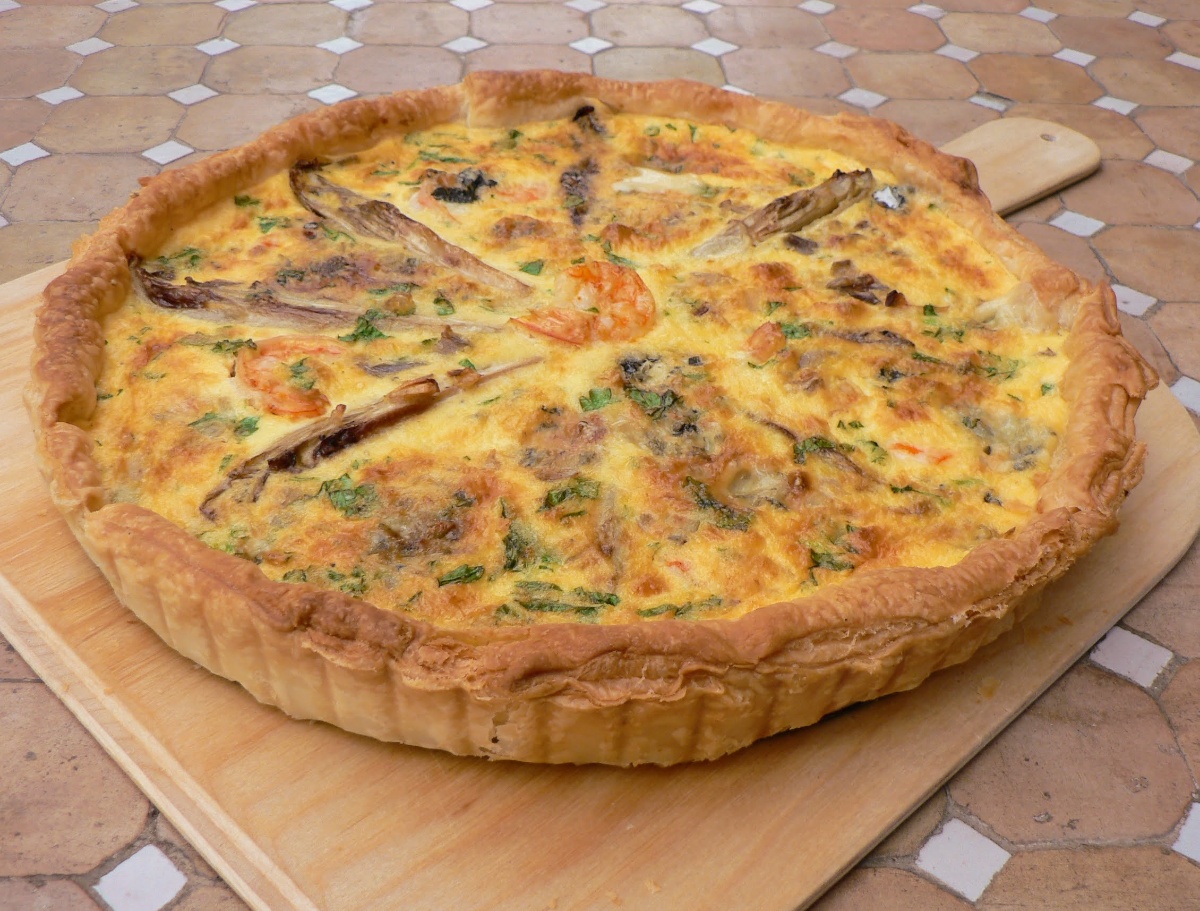
Endive works both raw and cooked, and the two preparations bring out different sides of it:
- Raw: sliced into salads with citrus, apple, walnuts, or blue cheese; whole leaves used as sturdy scoops for dips and spreads
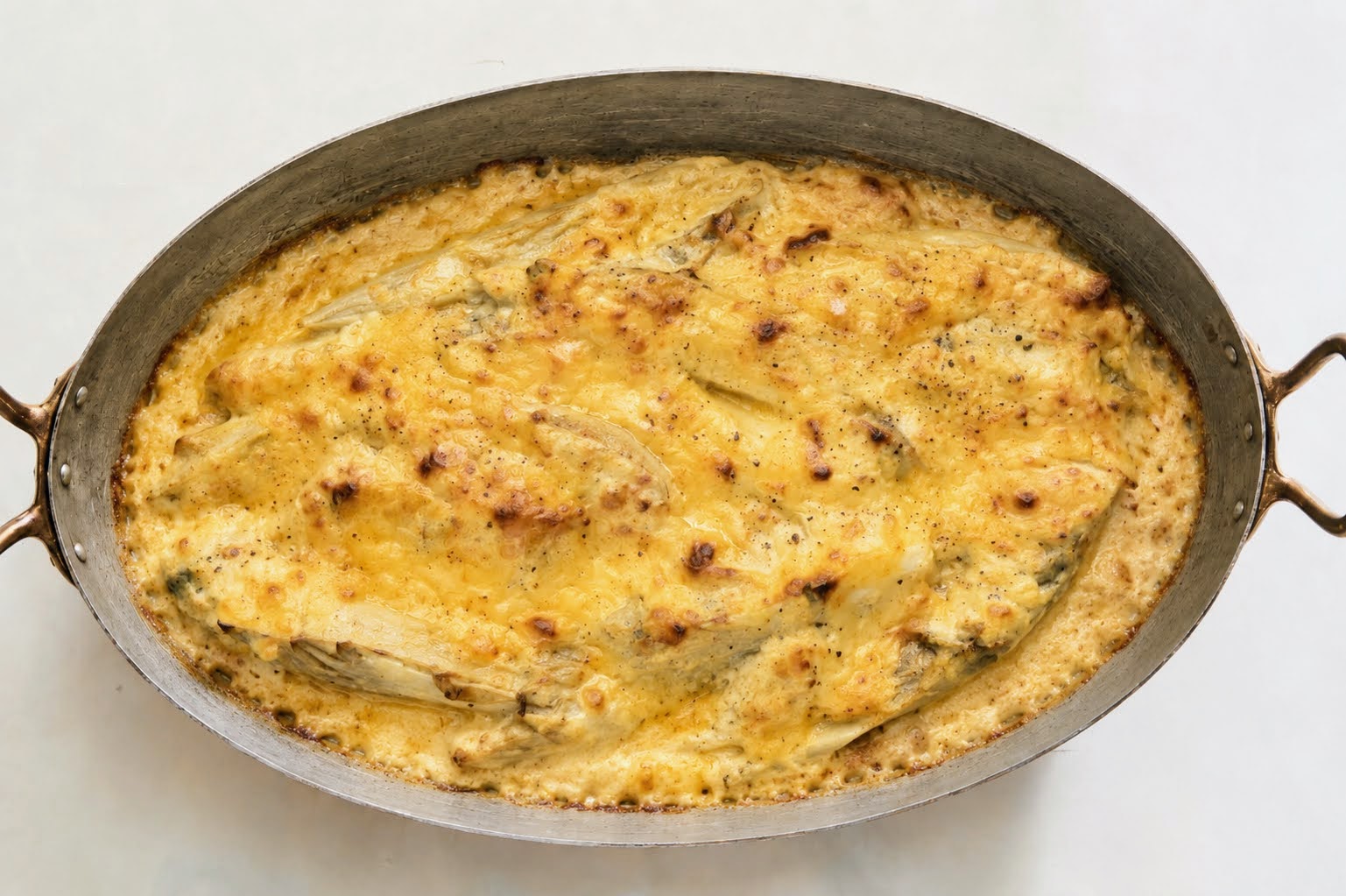
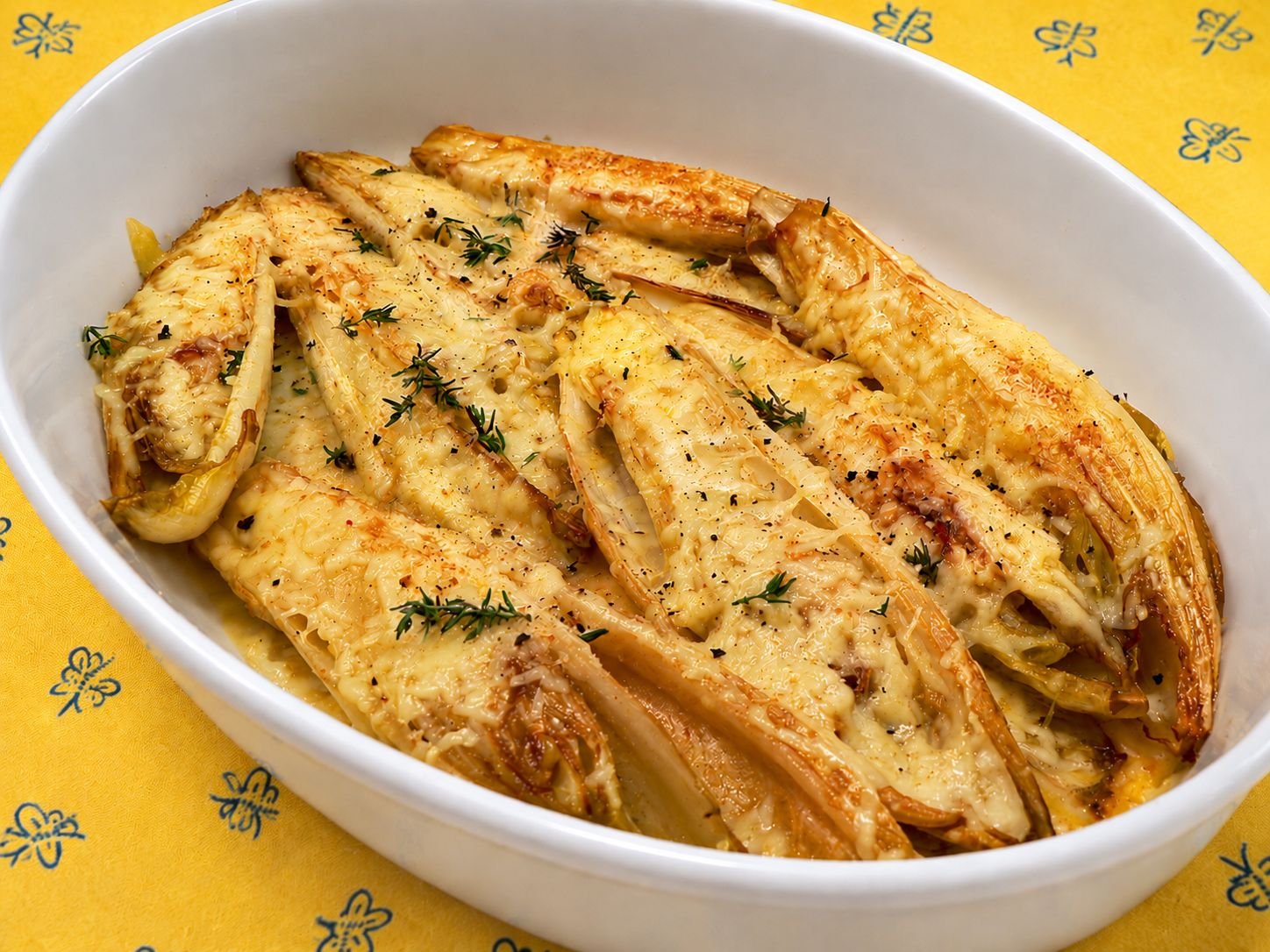
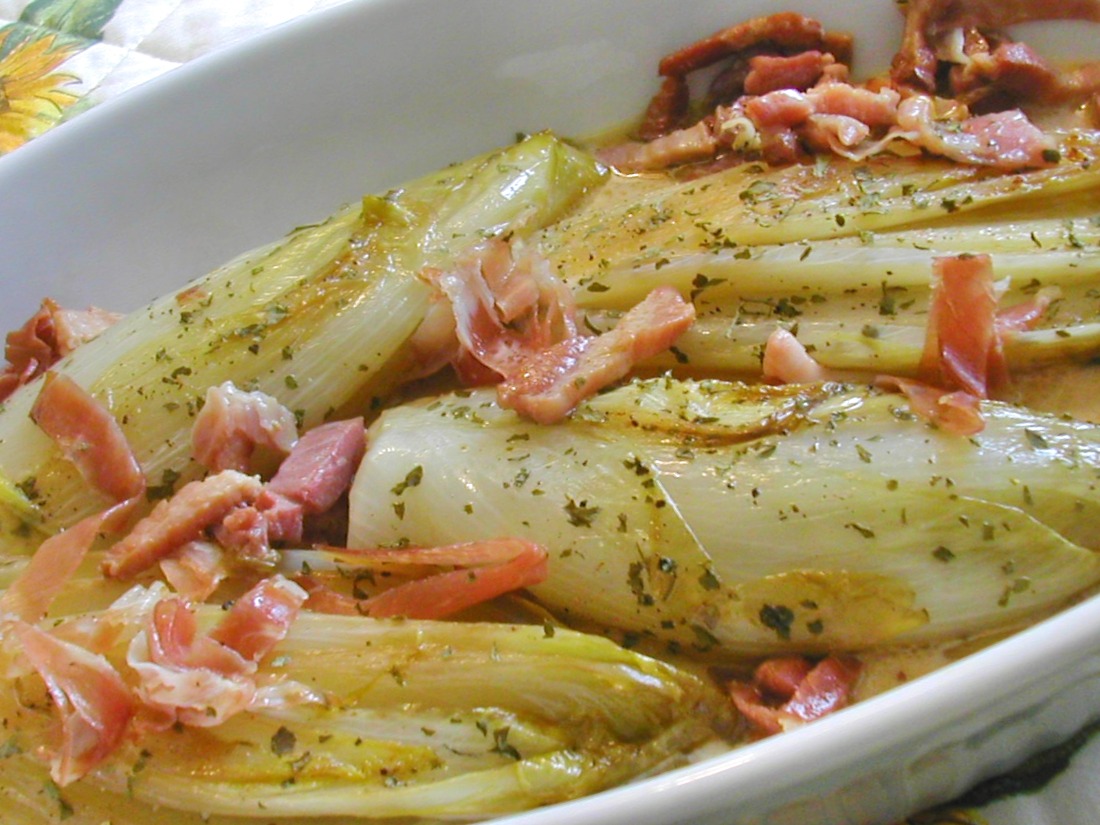
- Braised: halved lengthwise and cooked slowly in butter or stock, often finished with cheese, as in endives au gratin
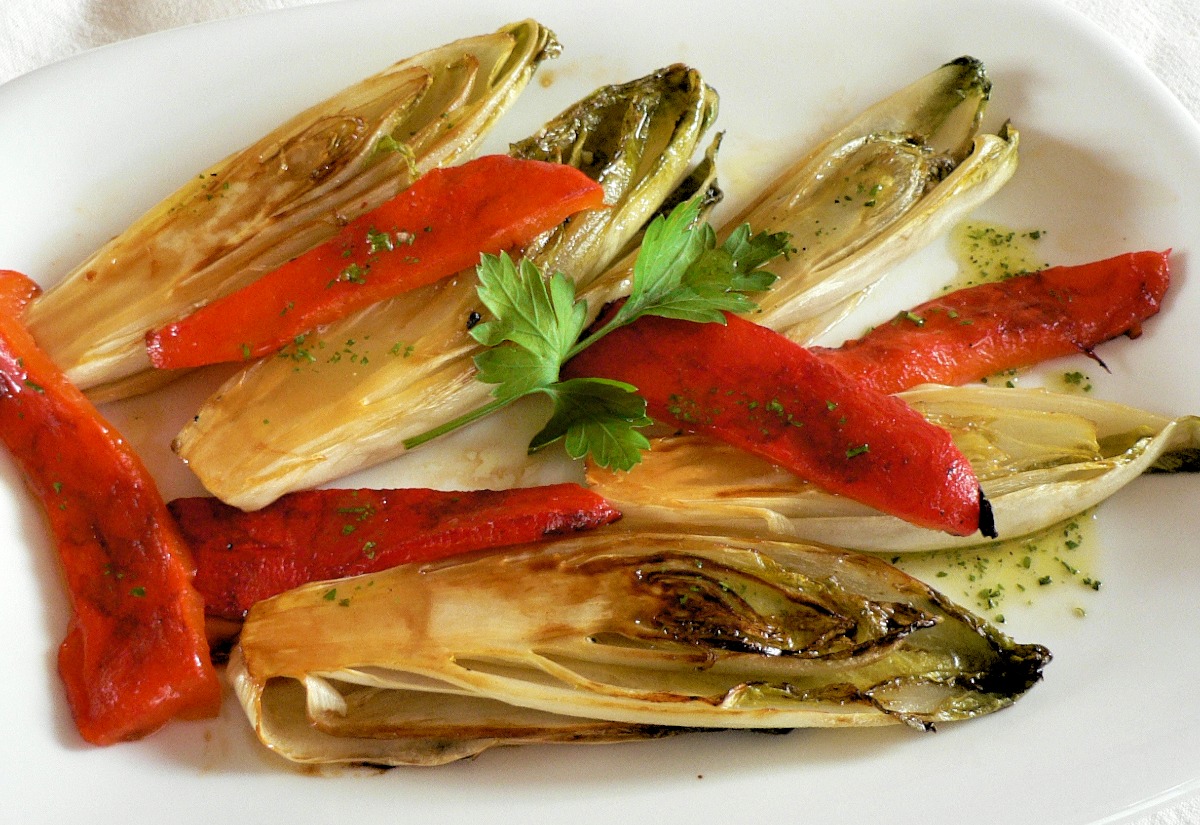
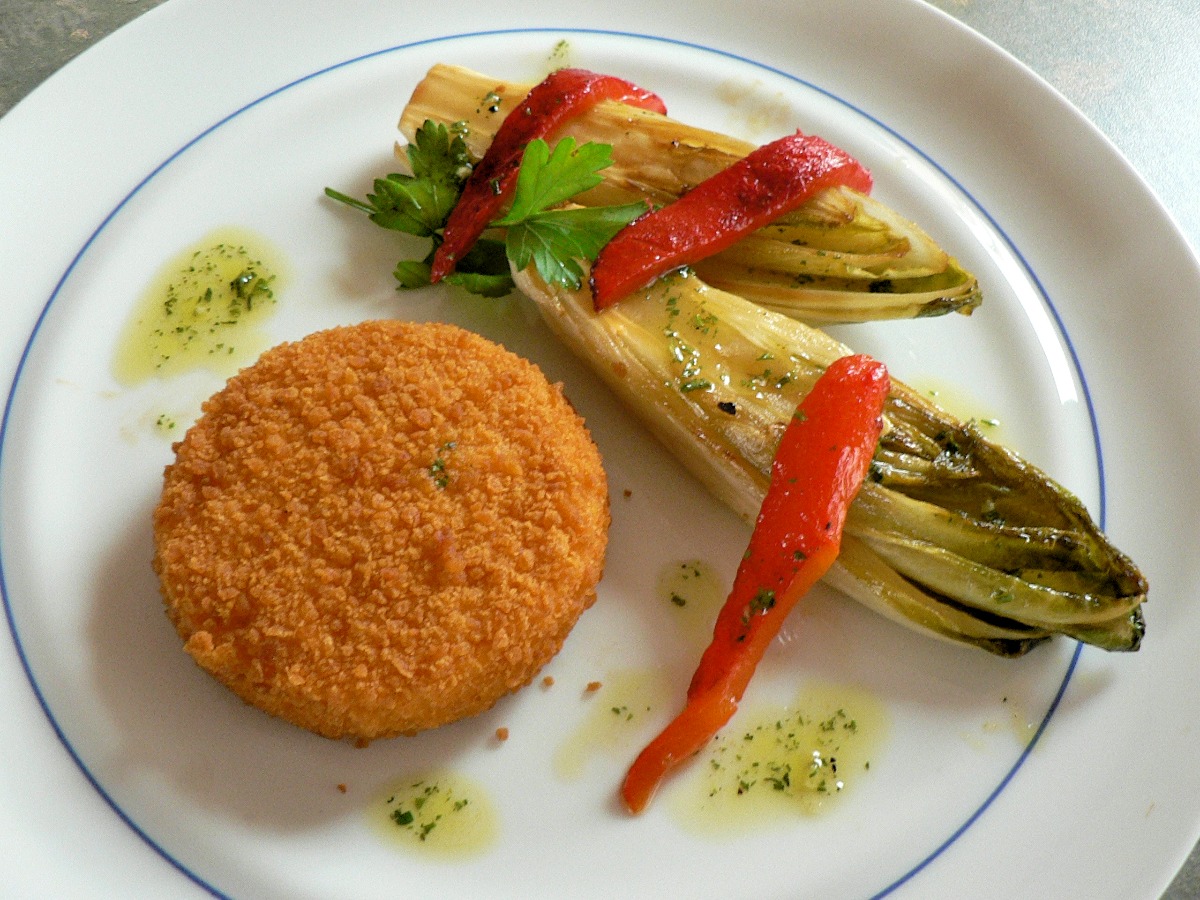
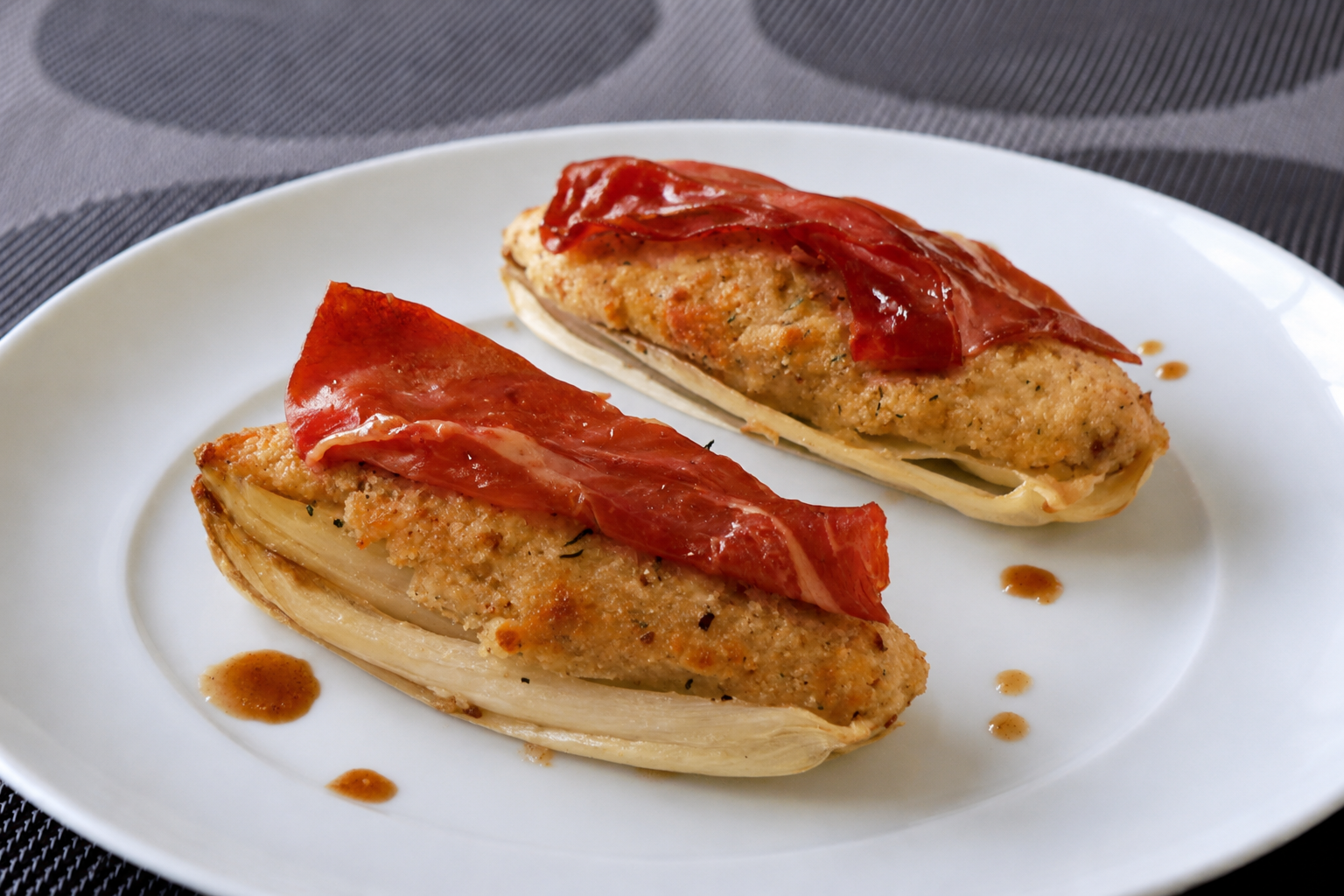
- Roasted or grilled: halved and cooked at high heat until the cut side caramelizes, then dressed simply
Meet the Growers
Belgium’s Old Guard: De Schouwer
Belgium’s domestic endive industry has shrunk hard since the 1970s, but some of the export houses are still standing. De Schouwer, a family business now on its third generation, has been shipping Belgian endive and other specialty vegetables to more than 25 countries since 1927. Which says something. Belgian trading houses still shape how the vegetable reaches the world, even though the actual growing has mostly left Belgian soil.
France’s Endive Machine: Perle du Nord
France’s endive industry, on the other hand, runs at real scale. Perle du Nord, founded in 1983 in the Pas-de-Calais, is a cooperative brand owned by five regional cooperatives and something like 120 to 140 growers. Together they turn out about 58,000 tonnes of endive a year, close to half of France’s total national volume. The brand has become Europe’s clear market leader. Seven in ten French households buy endive. Perle du Nord backs up that reach with savvy marketing: a packaging overhaul, per-piece pricing instead of by weight, national TV sponsorships. It’s hard to overstate how different that is from the US, where one grower still covers the market for a product that is unfamiliar to 99% of Americans and unsuitable for fast food.
An Aggie from UC Davis: Rich Collins
America’s only commercial endive grower “got his start washing dishes” In 1978 in a Sacramento restaurant kitchen – the typical rags to riches story in the US once you made it. In any case, Rich Collins heard his boss mention paying four dollars a pound for endive. As a student at UC Davis he sensed a business opportunity. Collins launched Rebel Farms in 1983. It took him 9 months “learning the ropes” in Europe and roughly a decade to actually get the finicky two-stage growing process on even footing. The company, now California Endive Farms, sits on nearly 300 acres in Rio Vista these days, growing a variety of premium products. It sells around 1.800 tons of endives a year (as compared to 58,000 tons of Perle du Nord) and is probably still the only commercial Belgian endive grower in the US. [Sources: UC Davis, “An Endive Endeavor”; Mollie Stone’s Markets, “Meet the Grower: Rich Collins of California Endive Farms.”]
What It Costs Today
Publix in Fort Myers, Florida currently prices Belgian endive at $5.53 for one single head. In Europe, retail runs closer to €0.99 for a 500-gram bag holding three or four heads, roughly $1.13 at current exchange rates, which works out to something like $0.28 to $0.38 per head. It’s the difference between a niche market in the US and a mass market in Europe. [Source: Ana Hruby July 2026]
Comments