Serves: 4 | Time: 50 minutes
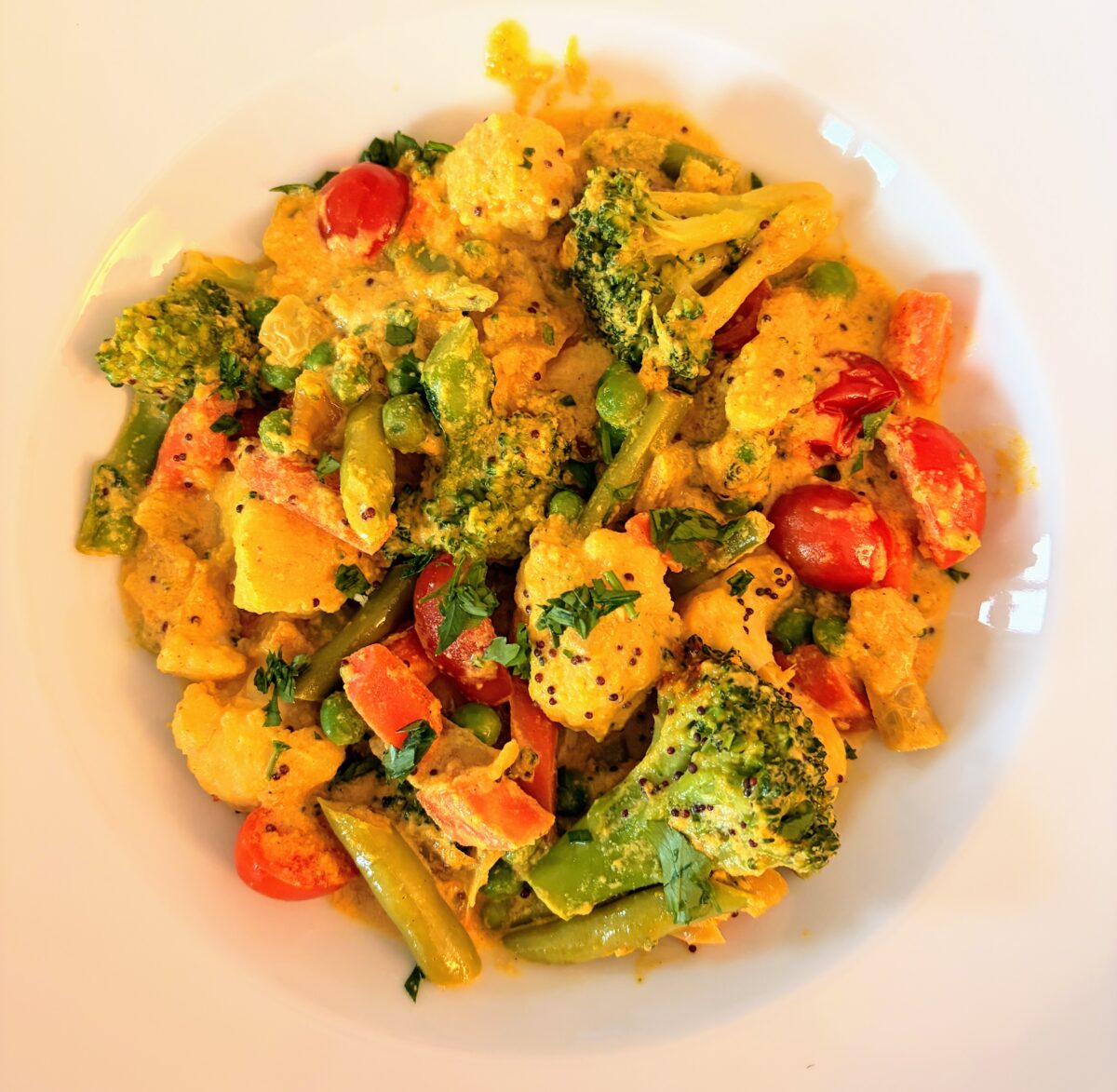
Korma is one of the great dishes in India. A stew built from a paste of nuts, onions, yogurt, and warm spices that simmers into something complex and deeply aromatic. No single flavor dominates. The word korma comes from the Urdu and Hindi qorma, meaning to braise. Developed in the royal kitchens of the Mughal Empire, it was originally a method for cooking meat slowly in its own juices with spices. This vegetable version is every bit as satisfying. The cauliflower absorbs the sauce; green peas add freshness. Serve with basmati rice or warm naan.
Ingredients:
Korma Paste
- ⅓ cup (45 g) raw cashews
- 2 Tbsp blanched almonds
- 1 medium onion, roughly chopped
- 4 cloves garlic, peeled
- 1 inch (2.5 cm) fresh ginger, peeled and roughly chopped
- ¼ cup (60 ml) water, to blend
Spices
- 1 tsp ground cumin
- 1 tsp ground coriander
- ½ tsp ground turmeric
- ½ tsp ground cardamom
- ¼ tsp ground cinnamon
- ¼ tsp ground white or black pepper
- 1 tsp garam masala (added at the end)
- Salt to taste
Vegetables and Sauce
- 2 Tbsp neutral oil or ghee
- 2 medium potatoes (about 14 oz / 400 g), peeled and cut into 1-inch cubes
- 1 small head cauliflower (about 14 oz / 400 g), cut into florets
- 1 cup (150 g) frozen green peas, thawed
- ½ cup (120 ml) plain whole-milk yogurt, whisked smooth
- ½ cup (120 ml) heavy cream or coconut cream
- ¾ cup (180 ml) vegetable broth or water
- 1 Tbsp rose water (optional, for a floral finish)
- 2 Tbsp fresh cilantro, roughly chopped, for garnish
- 2 Tbsp toasted cashews or almonds, for garnish
- Basmati rice or naan, to serve
Preparation:
Make the korma paste. Soak the cashews and almonds in hot water for 15 minutes. Drain and transfer to a blender along with the chopped onion, garlic, ginger, and ¼ cup of water. Blend to a smooth paste. Set aside.
Parboil the potatoes. Place the potato cubes in a saucepan of cold salted water. Bring to a boil and cook for 8 minutes — they should be just barely tender but not soft. Drain and set aside. This prevents them from breaking apart in the sauce.
Cook the paste. Heat the oil or ghee in a wide, heavy-bottomed pan over medium heat. Add the nut-and-onion paste and cook, stirring frequently, for 10–12 minutes until it turns a light golden color and the raw onion smell disappears. The paste will splutter — keep the heat at medium and stir steadily. This step builds the backbone of the sauce.
Add the dry spices. Stir in the cumin, coriander, turmeric, cardamom, cinnamon, and pepper. Cook for 1–2 minutes until fragrant. Season with salt.
Add yogurt and cream. Lower the heat. Add the whisked yogurt one tablespoon at a time, stirring continuously after each addition to prevent curdling. Once all the yogurt is incorporated, stir in the cream and broth. Bring to a gentle simmer.
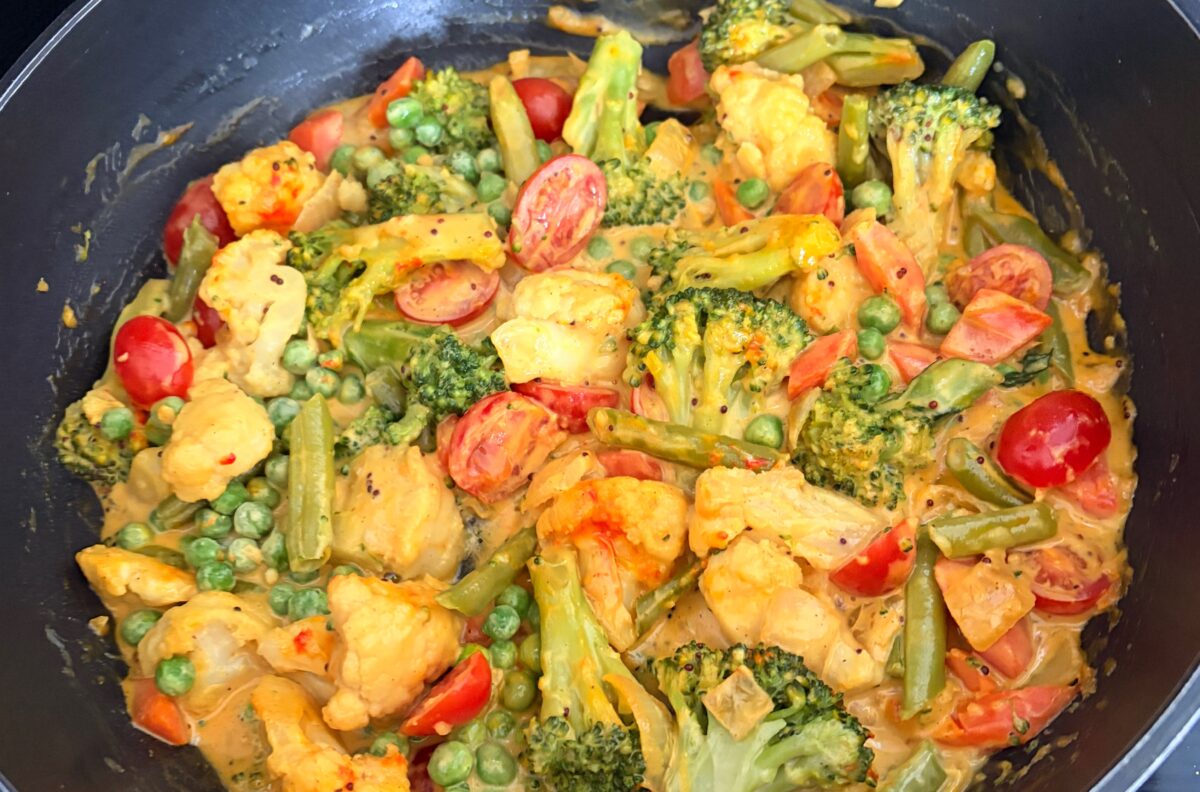
Add the vegetables. Add the parboiled potatoes and cauliflower florets. Stir to coat in the sauce. Cover and cook on low heat for 15 minutes, stirring occasionally, until the cauliflower is tender and the potatoes have absorbed some of the sauce. Add a splash of water if the sauce thickens too much.
Finish. Stir in the peas and garam masala. Cook uncovered for 3 more minutes. Taste for salt. Add the rose water if using — a small amount lifts the entire dish. Garnish with fresh cilantro and toasted nuts. Serve with basmati rice or warm naan.
Notes:
Yogurt curdling: Always whisk the yogurt smooth before adding and lower the heat before stirring it in. Adding it gradually, one tablespoon at a time, is the key to a creamy, stable sauce.
Nut-free option: Replace cashews and almonds with 3 Tbsp of sunflower seed butter or additional coconut cream. The sauce will be slightly lighter in texture but still rich.
Add protein: Paneer cubes pan-fried until golden make an excellent addition — stir them in with the peas at the end. Chickpeas work equally well for a heartier dish.
Make ahead: Korma tastes better the next day. The sauce keeps well in the refrigerator for up to 3 days and freezes well without the peas, which should be added fresh on reheating.